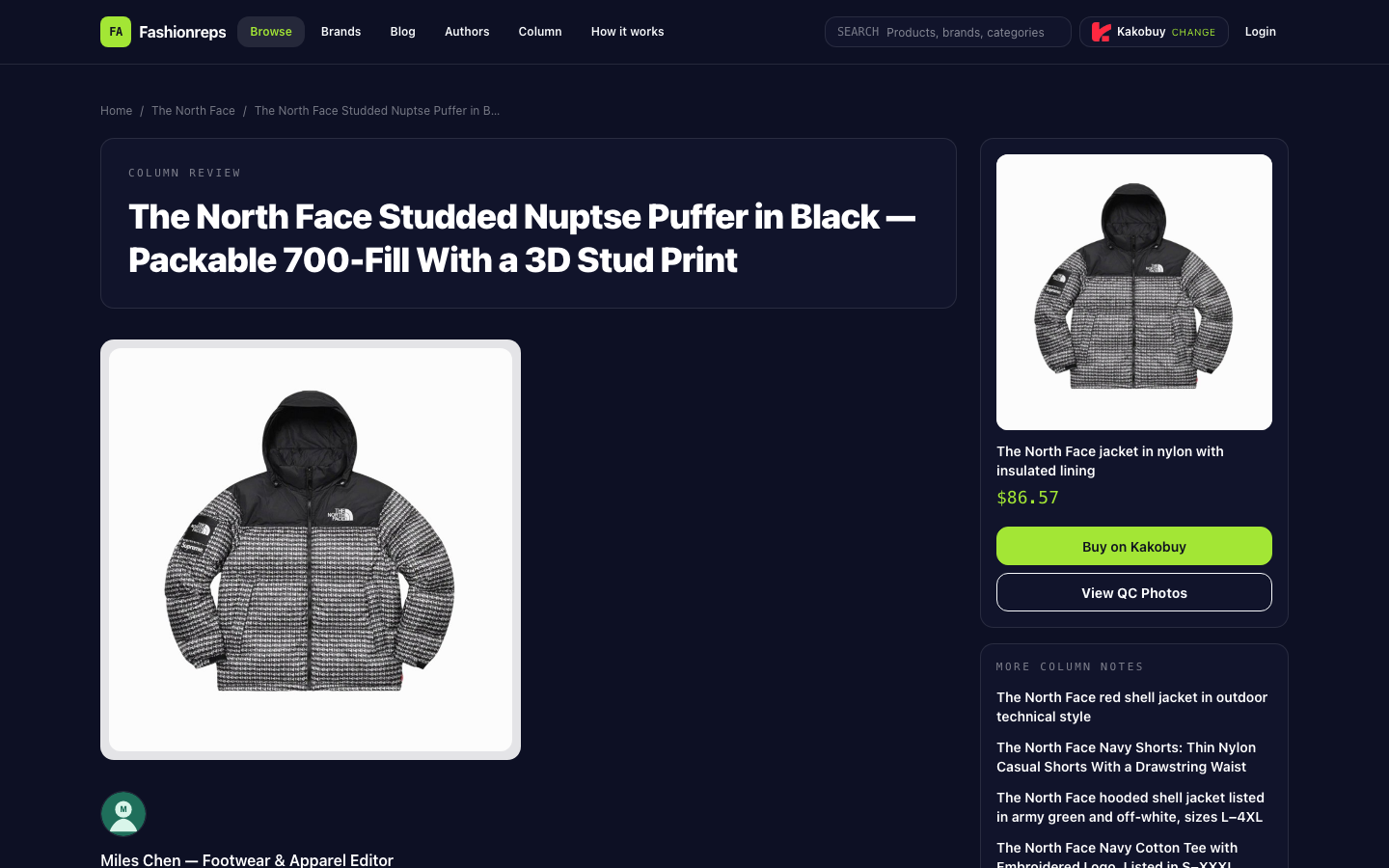
If you're planning to ship a The North Face Nuptse-style down jacket together with other items, don't just look at the reference price on the product page. What you really need to compare is whether the chargeable weight, route fees, surcharges, and tax treatment change between a single package and a combined package. Currently, there is no verifiable destination, package parameters, or official shipping cal
If you're planning to ship a The North Face Nuptse-style down jacket together with other items, don't just look at the reference price on the product page. What you really need to compare is whether the chargeable weight, route fees, surcharges, and tax treatment change between a single package and a combined package. Currently, there is no verifiable destination, package parameters, or official shipping calculation results, so it cannot be directly concluded that combining packages is definitely cheaper.

First, Confirm the Product and Order Status
The source page shows a black Studded Nuptse-style down jacket, which should not be directly considered as a verified official 1996 Nuptse product. The page states a reference price of $86.57, with a comparison price of $95.99; these are only product reference prices and do not include service fees, international shipping, or other settlement costs.
The page also lists 400g, 90% white duck down, and 700 fill power as product specifications, but there are no independent test results. Before combining packages, confirm the following:
- Whether the actual purchased style, color, and size match the page.
- Whether the item has been received at the warehouse and weighed and packaged.
- Whether the size range and inventory provided by the seller are clear. The page shows two sets of size information in different places, so you cannot judge inventory based on just one location.
- Whether separate wrapping, reinforcement, pressure protection, or removal of original packaging is needed.
- Whether the current order is still purchasable and whether the product price on the checkout page has changed.
What Data to Record for Single vs Combined Shipping
When comparing, use the same destination, same route, and same query time. Do not compare the actual weight of one package with the volumetric weight of another, and do not mix quotes from different routes.
| Check Item | Single Package | Combined Package |
|---|---|---|
| Number of packages | Nuptse alone in one package | Nuptse combined with other items |
| Actual weight | Based on warehouse weighing or checkout page | Based on re-weighing after combining |
| Outer box dimensions | Record length, width, height and units | Record length, width, height and units after combining |
| Chargeable weight | Record the rules and results shown by the calculator | Record the recalculated results after combining |
| Route and surcharges | Fixed route, fuel surcharge and other fee terms | Use exactly the same route and fee terms |
| Tax treatment | Record whether tax is included, prepaid, or separate | Record whether it changes after combining |
| Query time | Save the quote page or checkout page time | Save the re-quote time |
If the official calculator does not show complete parameters, at least save the destination country/region, package weight, dimensions, route name, and quote validity time. Missing these fields makes it impossible to determine whether the price difference comes from combining, or from changes in route, exchange rate, or packaging.
Separate Product Price, Service Fees, and Shipping
Total expenditure cannot be judged solely by the product page price. It is recommended to divide the settlement content into four groups:
- Product price: Record the currency and amount shown on the checkout page. The $86.57 reference price on the current page is only a reference product price and should not be treated as the final payment amount.
- Service fees and payment fees: Confirm whether they are charged based on product amount, order amount, or payment method, and record the currency. Without official settlement data, do not fill in estimated percentages.
- Packaging fees: Confirm whether combining triggers repackaging, reinforcement, removal of shoe boxes, or other handling fees. The product page does not provide these fees, so they cannot be inferred as zero.
- International shipping and taxes: Check using the official calculator of the target agent or logistics route, the order checkout page, or the warehouse shipping page. The current materials do not have destination and package parameters, so specific shipping costs, taxes, or combined savings cannot be provided.
Exchange rates should also be recorded separately. If the page displays prices in US dollars and your payment account uses another currency, save the exchange rate source used at the time of inquiry or the converted amount on the payment page. Do not combine product prices, shipping fees, and exchange rates from different dates into a single total.
When Not to Combine Packages for Now
If any of the following conditions occur, suspend confirming fees:
- The Nuptse has not yet been received at the warehouse; only the product page reference price is available, without actual weight and dimensions.
- Other items have not yet arrived at the warehouse, so the combined package's outer box dimensions cannot be determined.
- The calculator only shows a range quote without clear chargeable weight or fee breakdown.
- Single and combined packages use different routes.
- The page does not specify whether fuel surcharges, remote area fees, insurance, or taxes are additional.
- The combined package may exceed the route's weight, size, or declaration limits.
- You cannot confirm the currency and query time corresponding to the quote.
Review Checklist Before Submitting a Combined Package
Before submitting, save the following fields individually:
- Destination country, region, and postal code requirements.
- Actual color, size, quantity, and order status of the Nuptse.
- Single package's actual weight, length, width, height, and measurement units.
- Combined package's expected or confirmed actual weight, length, width, height, and measurement units.
- Chargeable weight for single and combined packages.
- Route name, delivery time description, and whether down products are restricted.
- Whether product price, service fees, payment fees, packaging fees, shipping fees, and taxes are itemized.
- Currency, exchange rate source, and query time.
- Whether the quote is the final settlement amount and whether it may be adjusted during review or shipping.
Conclusions should be based on two verifiable quotes: same destination, same route, similar query times, and both clearly listing chargeable weight and fee terms. The current materials only have product page information, without official shipping data for single and combined packages, so the judgment that can be made is to establish a checklist and stop conditions, not to claim that combining packages definitely saves money, nor to provide an unverified total price.