First, Look at the Color Relationships This backpack primarily uses black and white: white covers the upper half and shoulder strap area, while black is concentrated in the large front pocket, bottom panel, and back straps. On the front, there is a yellow vertical decorative strip and a yellow curved mark as shown in the image, creating a striking third-color accent. This color scheme suits a "black-and-white base with yellow accents" approach. For clothing, prioritize black, white, gray, or
First, Look at the Color Relationships
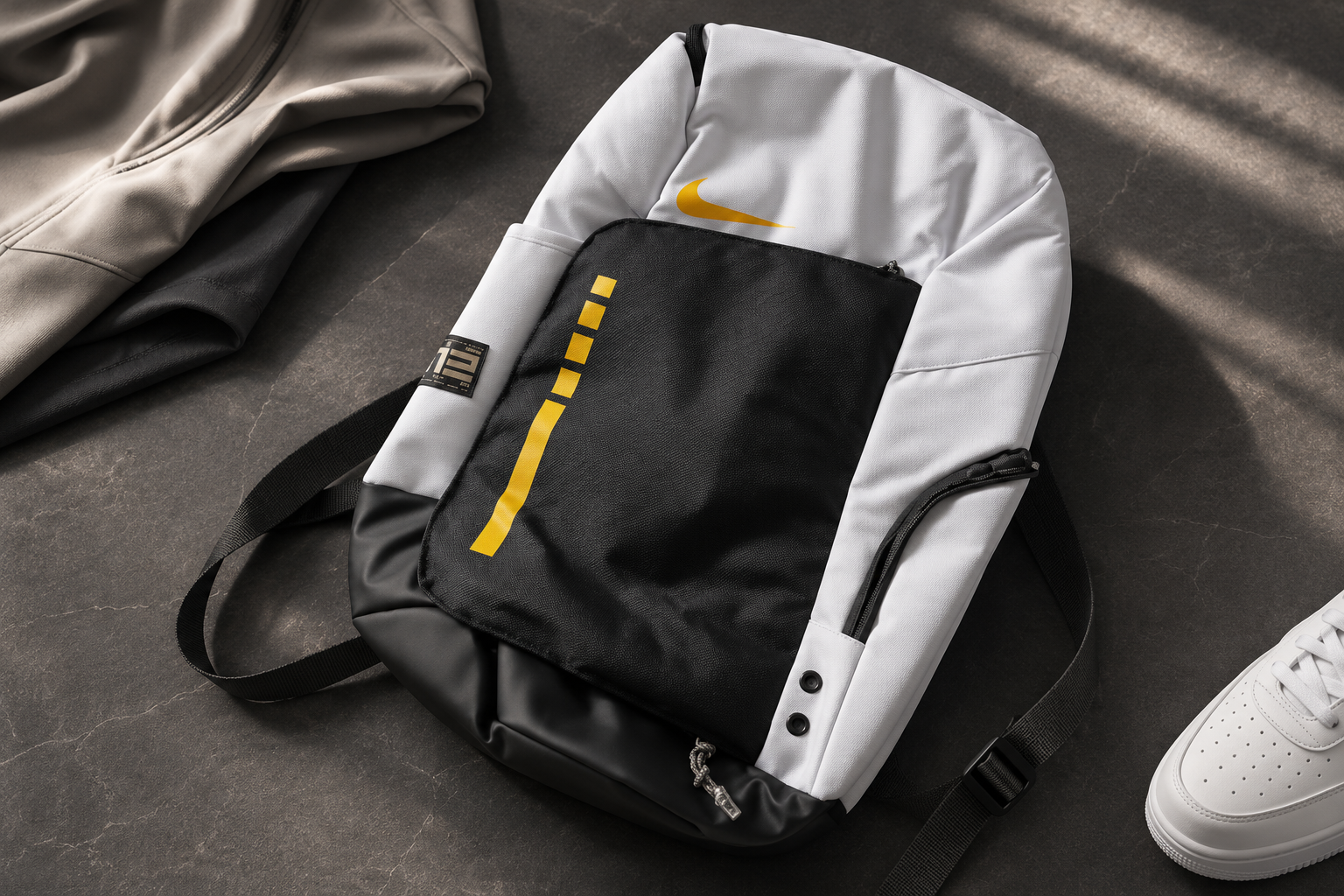
This backpack primarily uses black and white: white covers the upper half and shoulder strap area, while black is concentrated in the large front pocket, bottom panel, and back straps. On the front, there is a yellow vertical decorative strip and a yellow curved mark as shown in the image, creating a striking third-color accent.
This color scheme suits a "black-and-white base with yellow accents" approach. For clothing, prioritize black, white, gray, or beige, and avoid adding large areas of highly saturated colors. If you want to make the yellow details stand out more, you can add small amounts of similar colors in shoelaces, socks, hats, or small accessories. If the overall look already has yellow pieces, keep other accessories simple to avoid too many visual focal points.

How to Arrange the Front Details
The image places the backpack slightly right of center, with white shoes appearing in the lower right corner and stacked light-colored and black clothing visible in the upper left. This arrangement makes the backpack the main subject while using the shoes and clothing to suggest styling directions, without obscuring the front pocket, side zipper, and bottom structure.
To recreate a similar composition, arrange items in this order:
- First, place the backpack face up so the large black front pocket remains fully visible.
- Place light-colored clothing on one side to echo the white areas of the backpack.
- Choose white or black shoes for the corner as a color extension, but don't let them cover the main body of the backpack.
- Keep the side zipper, snaps, stitching, and bottom panel areas visible.
- Use a dark gray or black background to enhance the black-and-white contrast and let the yellow accents naturally become the visual focus.
Suggested Clothing Styling Directions
For everyday casual styling, wear a white top, black pants, and white shoes to directly correspond to the backpack's main color structure. If you want more depth, add a gray jacket or beige layering to soften the transition from pure black and white.
For a sportier look, pair a black or dark gray top with white shoes, and use yellow socks, a hat, or a thin strap to echo the yellow elements on the backpack. Yellow should only be a small accent, not the main color.
If the clothing itself has visible patterns, choose black-and-white or low-contrast patterns and place the backpack on the cleaner side. This preserves the backpack's black-and-white sections while preventing the yellow decorative strip from competing with clothing prints for attention.
Image Selection and Key Observation Points
This image is suitable for evaluating the front visual layering and display effect. The white upper half, large black front pocket, yellow decorative strip, vertical side zipper pocket, and black bottom area are all clearly identifiable, and the natural wrinkles, stitching, zippers, and snaps on the backpack surface are also shown fairly clearly.
However, a single front view cannot show the back structure, internal compartments, capacity, dimensions, material composition, zipper smoothness, load-bearing performance, or long-term durability. If these factors matter to you, check the corresponding back, interior, and size information before deciding if it suits your usage scenario.