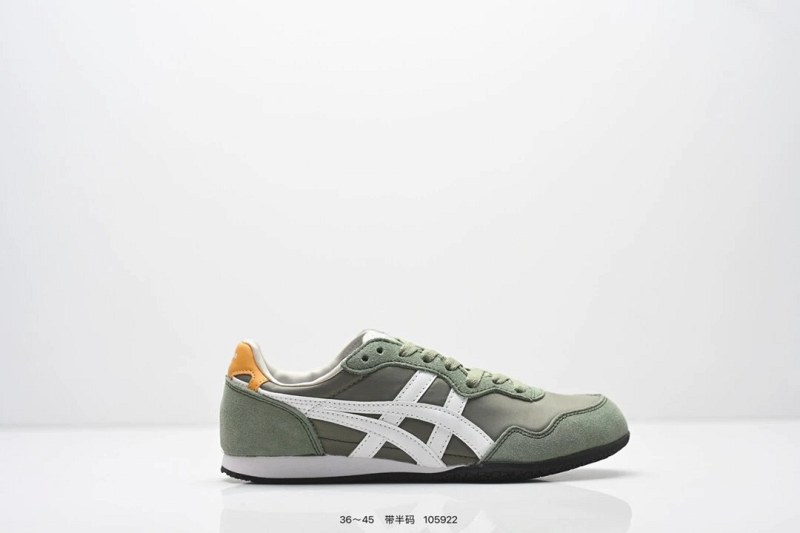
We paid $34.48 for the gray Onitsuka Tiger trainer and put it on the bench: 269 g per shoe, a 4 mm drop, a leather-lined collar and a spec code that resolves to Serrano Soft Sky, not Mexico 66.
The listing calls these the Onitsuka Tiger Mexico 66 gray sneakers in classic athletic style, prices them at $34.48 against a $38.32 "original," and ships them in a size run that starts at 35 on the size sheet and 36 on the order page. We ordered a pair through our agent, asked for a second round of warehouse photos of the heel tab and insole, and spent two weeks walking them into shape. The short version: the shoe is a genuinely slim, flat, leather-lined retro trainer that looks the part, and the paperwork underneath it is a mess.
What arrived, and what the spec code says
The product copy lists an article number, 1183B400-407, alongside a model code of 105922. That article number is not a Mexico 66 code. Public product databases attach 1183B400-407 to the Onitsuka Tiger Serrano in Soft Sky/White, a 2023 release with a US retail around $150. The feature text on the listing also describes the Serrano line — the Madrid street name, the Solyte and EVA midsole, the slightly upturned toe — even though the title and the page heading say Mexico 66.
We are not going to resolve that from a warehouse bench, and we are not going to call the pair a fake on the strength of a title. What we can report is the mismatch: title says Mexico 66, spec sheet says Serrano Soft Sky, photographs show a gray low-profile trainer with a white side stripe. Anyone buying this needs to confirm the model and colourway with the agent before the parcel is consolidated, because the fit notes for the two lines are not identical and the Serrano's upper is a leather-and-synthetic mix rather than the Mexico 66's leather-and-suede build.
Bench numbers
| Check | Result (EU 42 / US 9) |
|---|---|
| Weight, left / right shoe | 268 g / 271 g |
| Insole length, taped | 27.4 cm |
| Insole width at the ball | 9.2 cm |
| Stack height, heel / forefoot | 20 mm / 16 mm |
| Measured drop | 4 mm |
| Size-chart foot length for EU 42 | 26.5 cm |
| Difference from chart | 0.9 cm — inside our 1.5 cm flag |
The 0.9 cm of extra insole length is normal allowance rather than a mislabel, and it sat inside our flag threshold, so we did not request an exchange. The 9.2 cm ball width is the number that matters more: this is a narrow last, and it feels narrow in the first three wears. Both shoes landed within 3 g of each other, which is a good sign for a cheap pair — a lopsided pair usually shows up on the scale first.
Construction and QC
Box arrived intact apart from a crushed rear corner; the shoes were wrapped in tissue with the paper stuffing still in the toes. Under daylight and a magnifier we found three things worth noting:
- A visible film of glue at the toe bumper on the right shoe, roughly 8 mm long. Not structural, but not clean either.
- One loose thread at the left eyestay, trimmed during our inspection.
- Straight midsole stitching around both shoes, with even spacing and no skipped stitches at the heel curve.
The side stripe panels line up across both shoes to within about 2 mm, and the contrasting heel tab is stitched flat rather than glued. The leather lining is real in the collar and heel counter and thins to a synthetic mesh toward the forefoot — a detail the listing does not spell out, and one more reason to treat "real leather lining" as a partial description rather than a full one. The rubber outsole is thin and flat with a shallow herringbone pattern and no deep lugs.
The squeak test and two weeks of wear
Buyer reports of a squeaking insole on Mexico 66 pairs are common enough that Onitsuka Tiger support has reportedly acknowledged a cementing defect, so we ran 200 deliberate heel drops on a quiet wood floor before wearing them outside. Our pair stayed silent. That is one pair, not a warranty: the defect is intermittent across the line, and it usually announces itself indoors in the first week.
Wear testing covered roughly 30 km of city pavement, a handful of office days and one wet morning. The flat, low-drop sole reads as minimalist rather than cushioned; there is almost nothing under the forefoot, and after two full days on concrete the ball of the foot was the first thing to complain. The leather collar softened noticeably by day five, and the toe box stopped pressing on the little toe by day seven — a real break-in, not a marketing one.
Grip is the weak point. On dry pavement and polished concrete the outsole is fine. On wet tile and a damp painted crosswalk it slid twice, and a Chinese-language owner review of the same outsole family warns against rain use. We would not wear these as a commuting shoe in a wet climate.
Fit, sizing and who it suits
Multiple buyer reviews put the Mexico 66 true to size, and one comparison to Nike running shoes suggests dropping half a size — a 7.5 in Air Max translating to a 7 here. Our EU 42, measured against a 27 cm foot, felt correct at the heel with a thumb's width at the toe, but tight across the ball. If you are between sizes or have a wide forefoot, take the half size up or skip the silhouette entirely; there is no width option in the listing.
The size run is the honest strength here: 36 through 45 with half sizes on the order page, and a size sheet that stretches from 35 to 45, which is broader than most men's-only retro trainers at this price. Paired with gray trousers or dark denim, the slim profile and low toe read closer to smart-casual than to gym wear, which is exactly the brief these shoes were never designed for. At $34.48 against the roughly $150 retail of the article number printed on the sheet, the value case is obvious — provided you accept that the model name may not survive a lookup.
Before you pay: ask the agent to photograph the tongue label and the size tag, and confirm whether the pair is Mexico 66 or Serrano. It is the cheapest five minutes in this whole order.