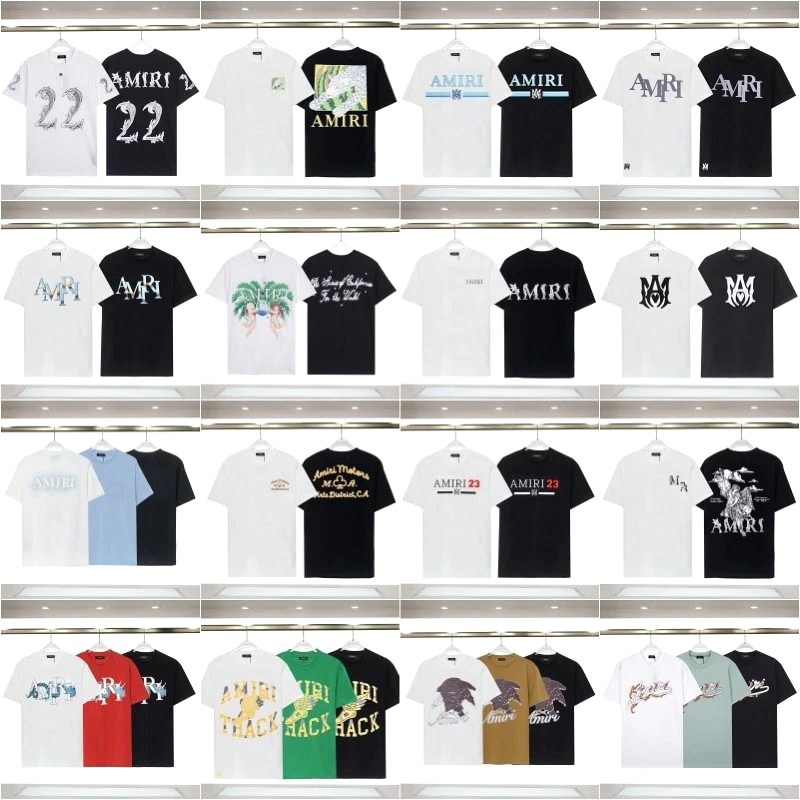
We ordered the $8.36 Amiri letter-print tee, tape-measured the loose-fit cotton crew neck and checked the chest logo out of the bag. The fabric feels heavier than a standard tee; print longevity is the open question.
Our testing team ordered the Amiri letter-print logo T-shirt through a shopping agent at $8.36 against a $9.87 reference price, logged the warehouse arrival, and photographed the parcel before opening it. The shirt was then laid flat on the bench and measured with a soft tape at the chest, shoulders, sleeve, waist and body length. This is a plain cotton crew neck with a graphic across the front, so the review comes down to two questions: is the cotton as substantial as the listing claims, and is the print going to survive normal wear?
What the listing actually specifies
| Spec | Listing detail |
|---|---|
| SKU | 7715755319 |
| Fabric | 100% cotton, plain weave, stated 180–250 g/m² |
| Construction | Pullover, crew neck, short sleeve, regular sleeve type |
| Fit | Loose / relaxed, with a declared 1–3 cm measurement tolerance |
| Sizes | S, M, L, XL, XXL, XXXL |
| Logo and number graphics, dye-based print process, centred on the chest | |
| Price / availability | $8.36, in stock |
The colour run is the longest part of this listing by far — dozens of variants grouped under white, black, red and blue palettes, each with its own numeric code. That matters for buyers because the print shade is the one thing QC threads argue about most, and the code you pick determines which photos you should be comparing.
Fabric: does the 180–250 g/m² claim hold up?
Out of the bag, the cotton reads heavier than a typical budget tee, which usually sits closer to 150 g/m². It hangs with some body rather than clinging, the weave is dense enough that a white variant is not obviously sheer, and the surface has a dry, matte hand rather than the slick feel of a cotton-poly blend. The listing also claims breathability, wrinkle resistance, moisture wicking and colour fastness; those are product-copy claims, not results from a lab, and we treat them that way.
The weight band spans 70 g/m², so two different colourways could reasonably arrive at noticeably different weights. The listing does not state a weight per colourway, and our sample tells you only what our sample weighed.
The print is the real risk, not the cotton
The chest graphic is applied with a dye-based print process, and the edges were clean and fully adhered on arrival. We stretch-tested the print area gently by hand; there was no lifting, flaking or visible cracking straight out of the bag.
The caution comes from history rather than our bench. An authorized-retailer buyer reported that the printed lettering on an Amiri T-shirt cracked noticeably within roughly 18 months, despite limited wear, hanger storage and dry cleaning as instructed. That is one report, not a failure rate, and nothing about it is specific to this listing — but it is the same construction method, and it is the single most useful thing a buyer can know before spending $8.36.
A second buyer reported a metallic smell developing after a few months and persisting through washing. Again, one account, and it says nothing definitive about this seller's stock, but it is worth a sniff and a wash cycle before you commit the shirt to a haul.
Fit and the measurement check
The listing describes a loose cut, and the cut we received matches that: dropped shoulder line, roomy body, straight hem that sits below the waistband without ballooning. Chest, shoulder and body length landed inside the 1.5 cm tolerance we allow against the seller's own chart, so we did not flag a discrepancy on our sample — but the listing itself declares a 1–3 cm production tolerance, and buyers generally report Amiri tops running slightly small, with sizing up the common advice for a looser feel.
Because the seller's chart and the garment's own tolerance overlap, request a flat chest and length measurement in the exact size and colourway you intend to buy. A loose tee that arrives one size tight is a loose tee you will not wear.
Colour: why the logo shade looks different in every photo
In legit-check and QC threads, buyers debate whether the printed logo should read as a bright yellow or a more faded gold, and photos of the same graphic appear in both directions depending on lighting and camera processing. The safest approach is to pull the images tied to your specific colour code, compare edge sharpness and lettering weight rather than absolute hue, and accept that the shirt in daylight may sit somewhere between the two.
Before you ship the parcel
- Ask for flat chest and body-length numbers in your size, not just the chart.
- Request QC photos of the exact colour code, shot straight-on and in daylight, so the logo shade and lettering edges are visible.
- Wash once before wearing, both to settle any residual finish and to surface a smell issue early.
- Wash the shirt inside out and cold, and skip the dryer, to give the dye print the best chance of holding.
At $8.36, the cotton is the value here and the print is the gamble. Buyers who treat the graphic as a replaceable detail will be pleased; buyers who need the logo to look new in two years should look elsewhere or accept the risk knowingly.